AI for HR: Pitfalls to Watch for and Why a Human HR Partner Still Wins
Artificial intelligence is transforming many aspects of business, including how companies handle HR. AI can offer speed, scalability, and data-driven insights. But when it comes to people, laws, and workplace culture, AI has limits.
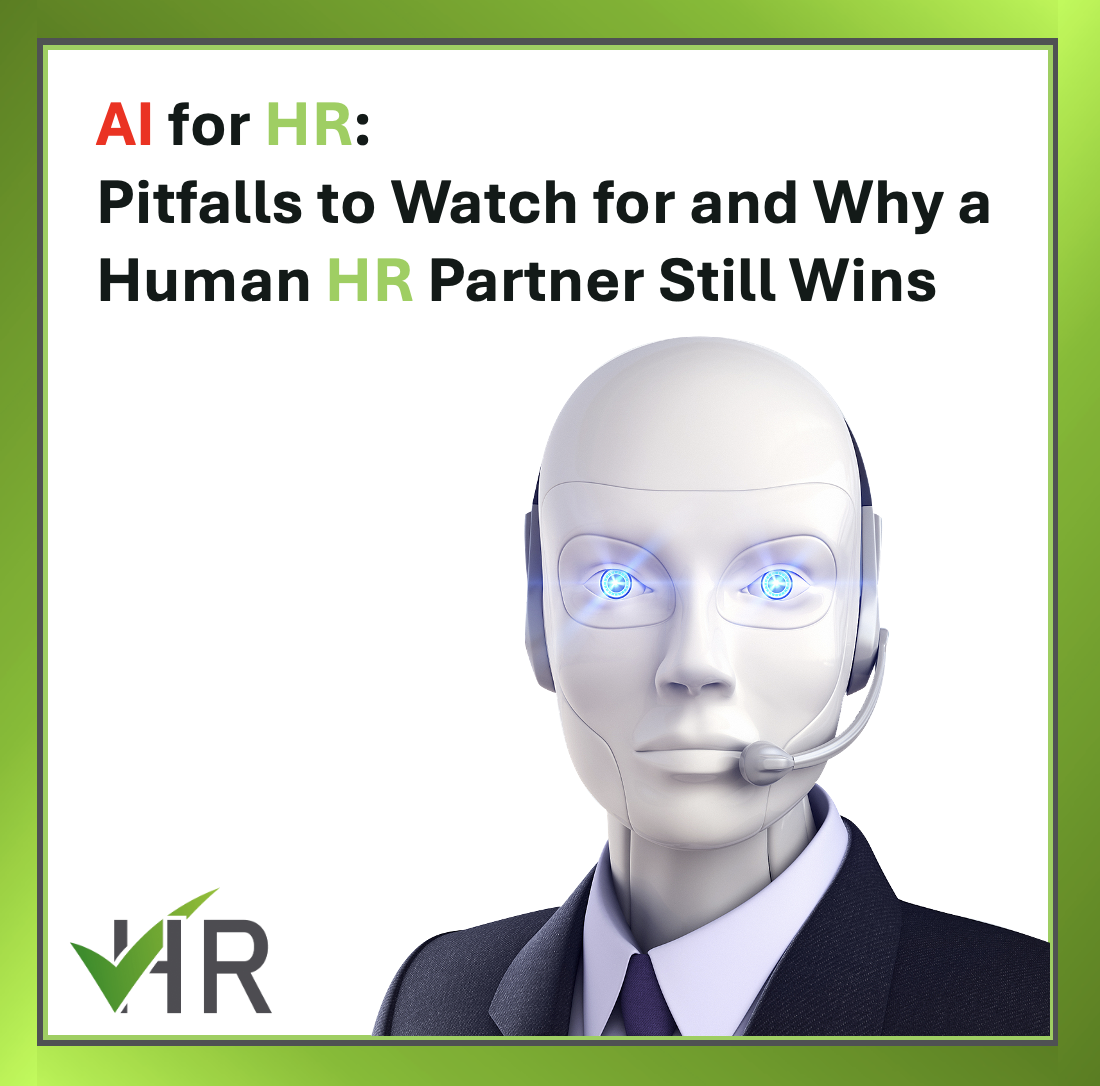
AI can speed HR tasks, but human expertise from Tick HR Solutions ensures compliant, context-aware results.
This article outlines common pitfalls of relying on AI for employee issues and highlights why partnering with a human HR expert like Tick HR Solutions leads to better, safer outcomes.
The pitfalls of relying on AI for HR issues
Relying on AI for HR tasks can save time, but it also carries real risks. Legal blind spots are a top concern: employment laws change frequently and vary by jurisdiction, and AI tools may miss updates or misinterpret rules. This can lead to incorrect disciplinary decisions, mishandled leave, or improper worker classifications.
Context matters as well, and AI often misses nuance, culture, and individual circumstances. A pattern in the data might look like a trend, but without human insight you can overlook what’s truly happening with a particular employee or team.
Data quality and bias is another challenge
AI is only as good as the data it’s trained on; biased or incomplete data can produce skewed guidance, potentially resulting in unfair outcomes. Some AI outputs are opaque, making it hard to explain decisions to employees, which can erode trust and invite grievance.
There’s also a risk that AI-driven processes feel impersonal, harming morale and engagement. Privacy and data protection are heightened concerns when handling sensitive HR information, and AI systems can complicate compliance if data governance isn’t robust.
Finally, templates and suggestions from AI can be generic and not fit your unique situation, and implementation gaps often arise when AI advice isn’t translated into practical, day-to-day procedures.
The costs of getting HR wrong with AI
The financial and reputational costs can be significant. Legally, incorrect classifications, mismanaged leave, or improper terminations can trigger audits, penalties, or lawsuits. The fines, back pay, settlements, and legal costs can run from thousands to millions, depending on the severity and scope of the violation.
Beyond money, there’s the hit to reputation and employee trust. Perceived bias or opaque decisions can erode confidence in the organisation, leading to higher turnover, difficulty attracting talent, and long-term brand damage.
Productivity and operational disruption are common collateral damages
Inaccurate policies or unclear processes generate repetitive questions, compliance gaps, and inconsistent management, which translates into lost productivity and delays in projects.
Employee relations and morale can suffer too when AI misreads context or causes unfair treatment, resulting in grievances, investigations, or whistleblowing, each costly and disruptive. If guidance is wrong, organisations also incur training and remediation costs as teams must be retrained, policies revised, and communications re-run.
Data protection breaches add another layer of risk, with regulatory fines and reputational harm. Finally, erroneous AI outputs can create a compliance backlog, forcing manual corrections and external audits that interrupt normal HR activity.
All of this highlights a simple truth
The cost of errors from AI in HR often far outweighs any initial savings. A human HR partner provides up-to-date legal guidance, contextual judgment, and accountable processes that reduce risk, protect people, and safeguard the business.
Why a human HR partner wins
A human HR partner offers legal confidence through up-to-date, jurisdiction-specific guidance and compliance. They provide context-aware advice tailored to your business size, sector, and culture, ensuring policies and decisions fit your real-world operations.
Transparent decisions matter too
A human can articulate the rationale and provide documentation that supports every action, which builds employee trust and makes audits easier. A people-first approach, empathy, thorough investigations, and fair outcomes, leads to better workplace relationships and more effective resolutions.
Structured, scalable processes are another strength
A good HR partner designs and maintains consistent disciplinary, grievance, and policy workflows that work across a growing company. When it comes to implementation, they offer practical help turning policies into training, notices, and everyday operations, making adoption smoother and more reliable.
They also take a proactive stance on risk management with regular audits and remediation plans, helping you head off problems before they escalate. And of course, time and cost efficiency come from having specialists handle complex HR tasks, freeing you to focus on core business while staying compliant.
At a glance
- AI is fast but not a substitute for expert HR in legal and people issues.
- AI can miss legal updates, context, and data quality, human judgment matters.
- The cost of AI mistakes can dwarf any initial savings.
- A human HR partner delivers compliant guidance, tailored advice, and proven processes.
- AI advice often needs translation into real-world steps.
- Laws change; AI may miss updates or misinterpret rules
- HR data is sensitive; AI raises data protection concerns.
- Generic outputs may not fit your situation.
If you’re considering AI for HR, start with a human HR review. Schedule a no-obligation consult with Tick HR Solutions to assess risks and tailor compliant, effective policies that protect your business and your people.
Call 01522 448 181 for friendly, no sales conversation.