
BBC’s The Traitors: What It Reveals About Bias, Groupthink and Better Workplace Decisions
The Traitors offers a surprisingly useful lens on how teams make decisions and how bias can creep in when evidence is thin.
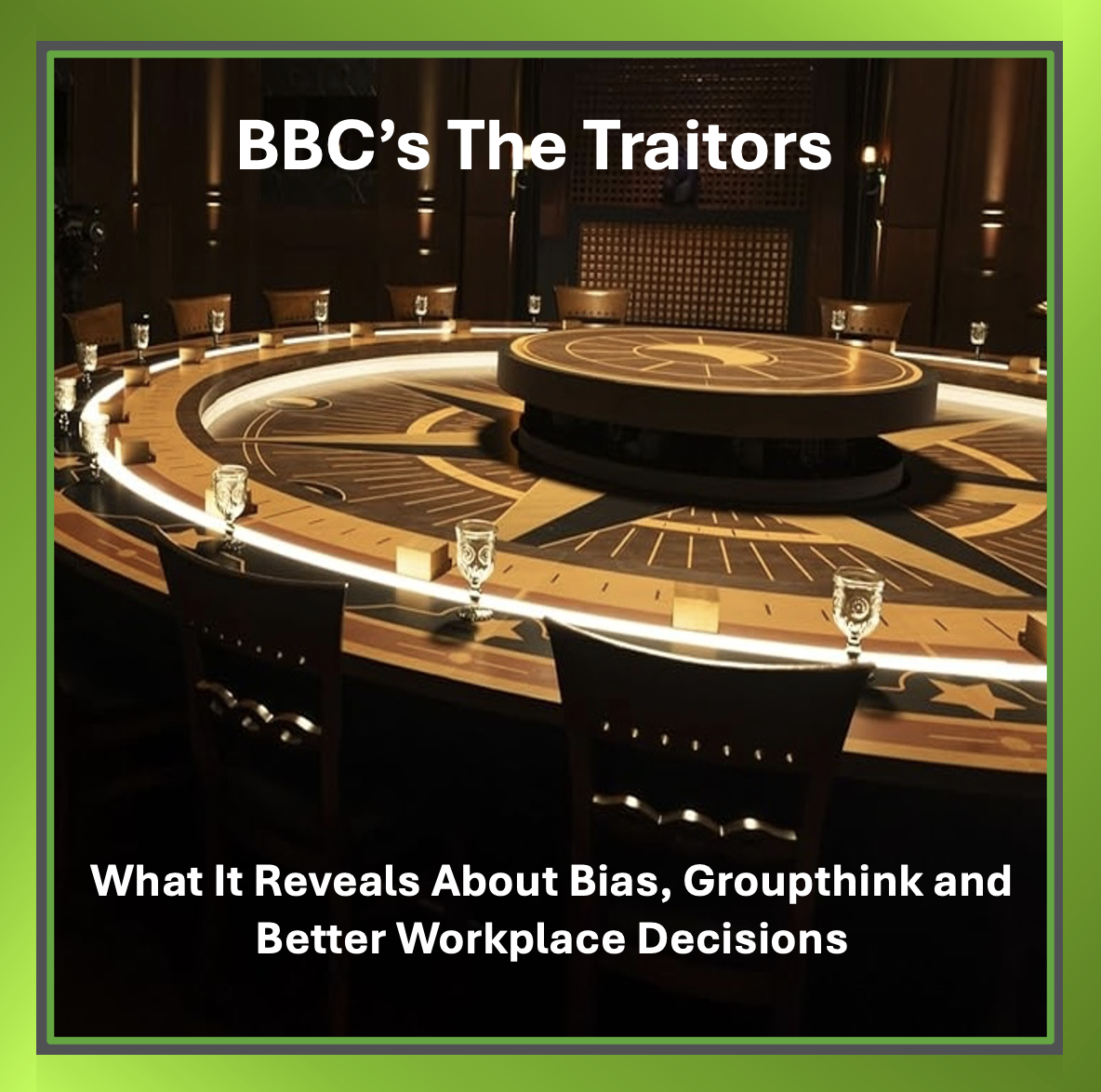
The round table is a masterclass in how fast opinions form
BBC reality TV show The Traitors has become an unexpected talking point for HR teams and with good reason. Strip away the castle and cloaks, and you’re left with a familiar workplace challenge, people making high-stakes decisions about trust, competence and intent, often with limited evidence and plenty of social pressure.
Why HR finds The Traitors so relatable
The show is a live demonstration of team dynamics in action, how alliances form, whose voices carry weight, how quickly a “shared narrative” becomes treated as fact, and how presentation (confidence, communication style, first impressions) can shape outcomes as much as evidence.
But the last series has also prompted wider debate across mainstream and social media about whether contestants are bringing uncomfortable biases into the room, particularly around ethnicity, age and sex. Similar worries have trailed other reality shows as well. Is this just over analysis, or a valid reason to pause and reflect?
Patterns that raise questions
Media commentary has pointed to trends worth interrogating. For example, analysis reported in The Times suggests that while a significant proportion of contestants have been from ethnic minority backgrounds, they appear to be overrepresented among early exits across the UK series to date. The same reporting noted there have been no non-white winners so far.
Other commentary has highlighted that older players can be disadvantaged, with participants in their 60s reportedly more likely to be “banished” or “murdered” earlier than younger contestants.
To be clear, correlation isn’t proof of bias in any individual decision, and the game format makes “right” judgments genuinely difficult. But for HR, that’s precisely the point, workplace decisions are often made under similar conditions, imperfect information, time pressure, and strong social influence.
The risk of groupthink (and the loudest voice winning)
One of the clearest HR lessons from The Traitors is how quickly groupthink can set in. Once a confident person frames a theory, the group can start filtering new information through that lens, challenging views are brushed aside, and dissent feels risky.
In organisations, this can lead to comfortable consensus rather than correct decisions. It can also mean that the most valuable perspectives often cautious, analytical or minority viewpoints never get properly aired.
Don’t forget your introverts (or quieter contributors)
Quieter team members may need more time to process and speak, yet they often bring depth, pattern spotting and risk awareness. In group settings, those contributions can be unintentionally crowded out.
Practical ways leaders can reduce “volume bias” include:
- Round robin input so everyone speaks in turn
- Written views first, before discussion starts (to reduce anchoring)
- Smaller breakouts before returning to a full-group decision
- Active facilitation to prevent one or two people dominating
These structures don’t slow teams down, they improve decision quality.
When “gut feel” becomes a decision-making shortcut
Early in The Traitors, contestants have little real evidence. That’s when people lean on “vibes,” familiarity, and snap judgments to justify their votes. Psychologists and workplace commentators have noted that these are exactly the conditions where unconscious bias is most likely to influence outcomes, quick decisions, incomplete information, and a need to feel certain.
In the workplace, the same dynamic can show up in:
- Recruitment (“not quite the right fit”)
- Performance assessments (confidence mistaken for competence)
- Promotion decisions (potential assessed through similarity)
- Disciplinary processes (assumptions filling evidence gaps)
And importantly, bias isn’t limited to race or sex. It can attach to accent, disability, neurodivergence, communication style, or simply being “different from the norm.”
The legal and organisational stakes
Unchecked bias doesn’t just harm culture it increases risk. Where decisions are influenced by protected characteristics, employers can face discrimination claims under the Equality Act 2010. Even when intentions are good, a process that isn’t structured and evidence led can produce unfair outcomes.
What Tick HR Solutions recommends: turning insight into action
The Traitors is a reminder that good intentions aren’t a control measure. Fairness is built through design. Practical safeguards include:
- Clear criteria for hiring, promotion and performance ratings
- Diverse decision making panels to reduce groupthink
- Documented evidence behind decisions (not “general impressions”)
- Training that goes beyond awareness, focusing on real scenarios and accountability
- Psychological safety, so people can challenge assumptions without fear
Final thought
No contestant has publicly claimed bias and it’s entirely possible that some outcomes are coincidence, driven by the game’s uncertainty. Still, The Traitors continues to do what great case studies do, it sparks debate and exposes how human decision making really works under pressure.
If we can spot these patterns in a TV show, we can certainly design workplaces that protect against them.