Mindset Is Everything: The Goldfish, the Shark Fin, and the Role HR Plays
There’s an image that sticks with you the moment you see it: a goldfish with a shark’s fin strapped to its back.
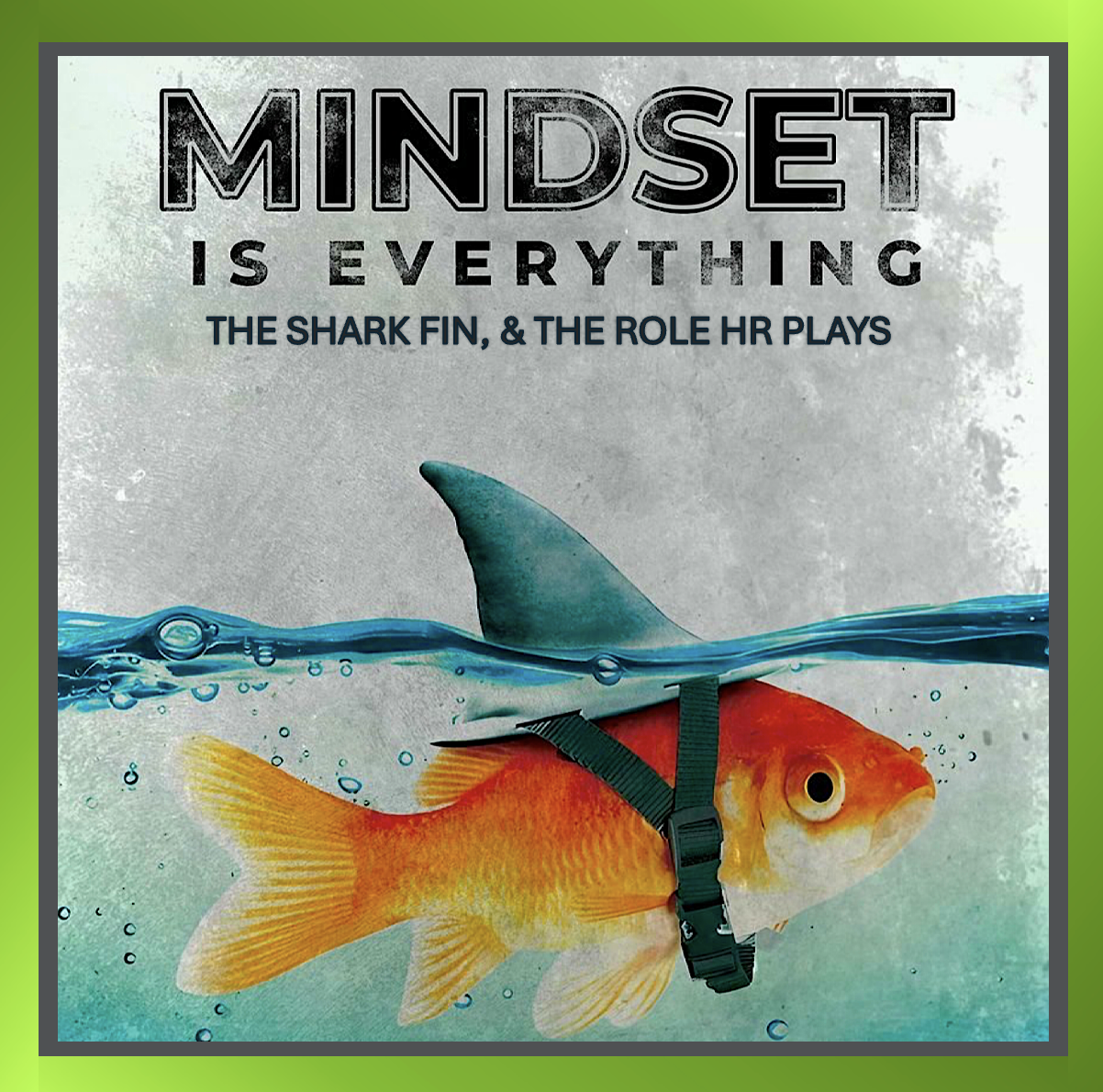
A goldfish with a shark fin: a reminder that confidence and capability grow when culture makes it safe to try.
It’s funny at first because it shouldn’t work. A goldfish isn’t a shark. It’s small, harmless, and not exactly known for dominance. But the longer you sit with the image, the more meaningful it becomes, especially in the world of work.
Because if there’s one thing HR professionals learn quickly, it’s this: mindset shapes behaviour. Behaviour shapes performance. And performance shapes culture.
In other words, mindset isn’t a “nice-to-have.” It’s the starting point.
The goldfish story: when capability is hidden behind self-belief
Most workplaces are full of people who are far more capable than they appear on paper or even in meetings. Not because they lack skill, but because they’ve internalised a story about themselves that keeps them small.
You hear it in subtle ways:
“I’m not really confident presenting.”
“I’m more of a support person.”
“I’m not ready to apply yet.”
“I don’t want to look silly.”
That isn’t laziness. It isn’t a lack of ambition. It’s often a protection mechanism, one that grows in environments where mistakes are remembered more than progress, where only the loudest voices are rewarded, or where development is assumed rather than supported.
That’s the goldfish not lacking potential, but swimming inside perceived limitations.
The shark fin, what growth looks like before it feels comfortable
Now think about that fin. It doesn’t magically turn the goldfish into something else. But it changes how the goldfish is seen and more importantly, it changes how the goldfish might begin to see itself.
That’s what a growth mindset does in the workplace.
A growth mindset isn’t pretending you’re already excellent at everything. It’s the belief that you can improve through practice, feedback, effort, and support. It’s the moment someone decides to act like the person they’re becoming, not the person they’ve always been.
In real organisational terms, it might look like someone taking a stretch assignment before they feel fully ready. It might look like speaking up once in a meeting when they’ve stayed quiet for months. It might look like asking for feedback and using it, instead of avoiding it.
The fin is that first visible sign of courage.
Perception becomes performance (and HR influences both)
One of the most underestimated realities in people and culture work is how much people perform to match their identity.
When someone believes they’re capable, they tend to prepare more, contribute more, recover faster, and take ownership earlier. When someone believes they’re “not that type of person,” they often hold back, sometimes without even realising they’re doing it.
This is where HR’s influence is powerful, because culture is built from signals:
- What gets recognised?
- Who gets opportunities?
- What happens when someone gets it wrong?
- Do managers coach, or only correct?
- Is development structured, or left to chance?
Over time, these signals become the workplace “truth,” and employees adjust their mindset accordingly.
Creating a “wear the fin” culture, boldness without fear
Healthy cultures don’t rely on confidence arriving by accident. They create the conditions where people can be brave without being punished for it.
That doesn’t mean lowering standards. It means changing the cost of trying.
When people feel psychologically safe, they bring ideas earlier. They flag risks sooner. They collaborate more honestly. They innovate because they’re not busy self-protecting. And when boldness becomes normal, you don’t need to beg for initiative, people start offering it.
At Tick HR Solutions, we view this as a practical HR mission, not an abstract one. It’s about designing performance conversations that build forward momentum. It’s about training managers to develop people, not just allocate work. It’s about creating pathways so employees can see progress, not guess at it. It’s about recognition that reinforces learning, ownership, and contribution not only perfect outcomes.
The most important lesson: innovation often comes from “unexpected” people
A goldfish with a shark fin is also a reminder that strength doesn’t always look the way we expect.
Some high-potential employees aren’t naturally loud. Some future leaders aren’t “traditional.” Some of the best ideas don’t come from the most senior person in the room.
When HR systems make room for different personalities and different thinking styles, businesses stop relying on a small group of “usual suspects” and start unlocking capability across the organisation.
Often, the person who surprises everyone first had to be given permission explicitly or implicitly to step forward.
Mindset isn’t motivational, it’s operational
“Mindset is everything” can sound like a slogan, but in HR it’s operational. It’s built (or broken) through everyday decisions: who is trusted, who is developed, what failure costs, what success looks like, and whether progress is visible.
If you would like to discuss this any further or find out more about our Evolve Hub training services, please call our Team on 01522 448 181