
Managing Annual Leave and Summer Staffing
As summer approaches, businesses face a familiar challenge, balancing employee time off with operational needs. When multiple staff members request the same dates, managing leave fairly becomes critical to maintaining morale and preventing unnecessary conflict.
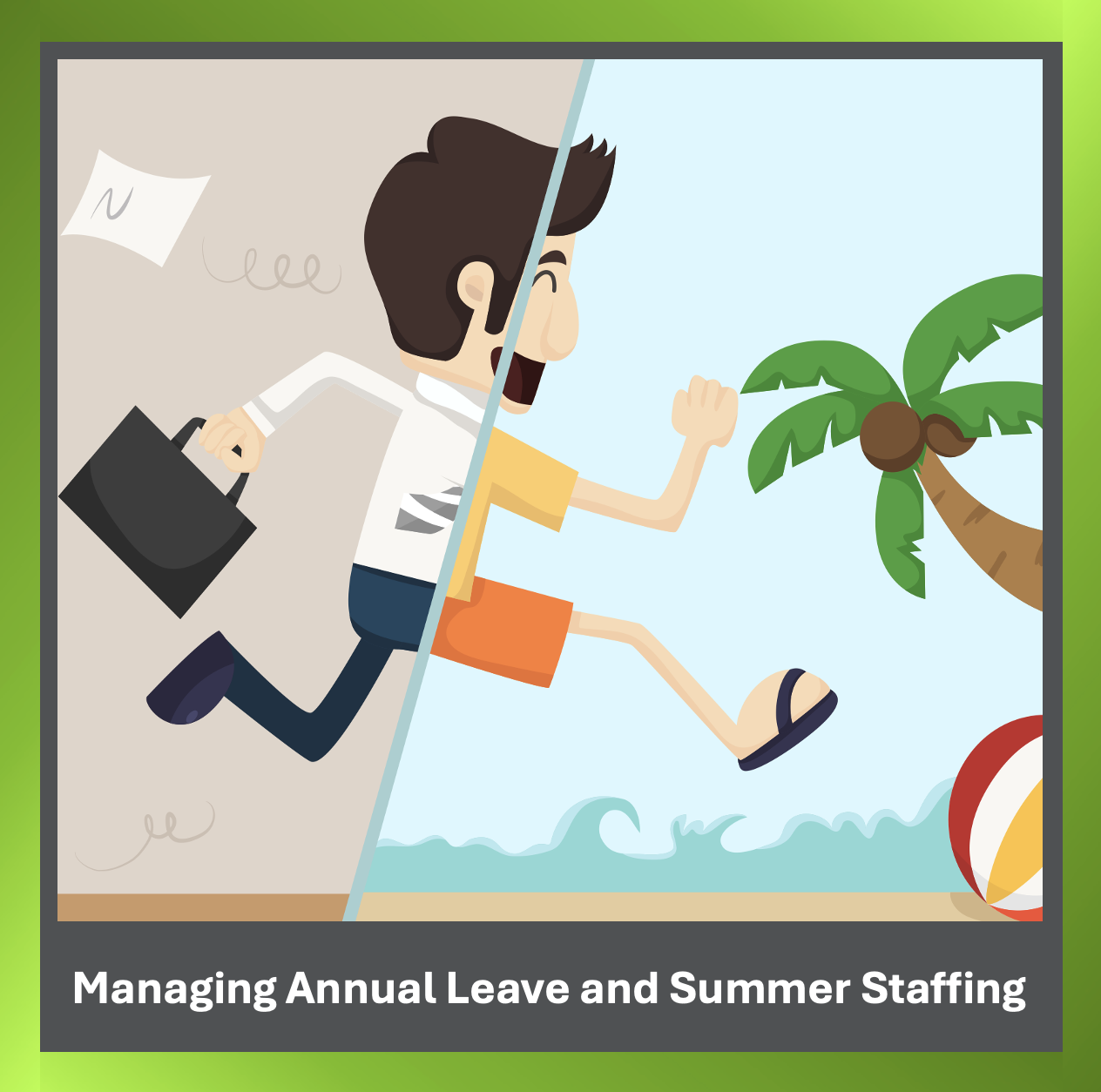
balancing work commitments with leisure and vacation time.
Why Summer Leave Creates Pressure
Summer is peak holiday season for most organisations. Employees want time off for school holidays, family commitments, and warm weather breaks but business demands don’t pause. Without clear systems, leave requests can feel arbitrary, creating resentment and tension across teams.
A Clear Leave Policy
Start with a well defined policy that outlines how and when leave should be requested, required notice periods, approval processes, and any restrictions during peak times. A clear policy removes ambiguity and gives managers confidence to make consistent decisions.
Key elements to include:
- Request deadlines and notice periods
- Approval procedures
- Limits on simultaneous absences
- How competing requests are handled
- Carry-over and cancellation rules
Communicate this policy during onboarding and remind employees before peak periods.
Planning Ahead Prevents Crisis
Early planning is essential. Encourage employees to submit requests as soon as possible. This advance notice allows managers to identify pressure points and make fair decisions rather than scrambling at the last minute.
Review likely bottlenecks, early school holidays, known busy periods, and operational demands so you understand where leave demand will be highest. Check team capacity before approving leave to ensure adequate staffing.
Managing Competing Requests
When multiple employees request the same dates, use your established process rather than making ad-hoc judgments. Consider implementing:
- First-come, first-served with managerial review to prevent critical staff from being absent simultaneously
- Rotational systems for popular dates like school holidays
- Staggered leave across departments to maintain coverage
Communicate decisions clearly and promptly. Explain why requests were approved or denied to employees who may not like the outcome, but they’re more likely to accept it if they understand the reasoning. Where possible, suggest alternatives like adjusting dates or splitting leave across different weeks.
Consistency Builds Trust
Apply your policy uniformly across the organisation. Avoid informal exceptions that undermine the process, approving one request outside normal procedures signals unfairness to others. When managers follow the same approach for everyone, disputes decrease significantly.
Supporting Managers and Teams
Give supervisors clear guidance on handling requests and hold them accountable for maintaining adequate staffing while applying policy consistently. Early conversations between managers and employees prevent conflicts from escalating.
Crosstrain staff where possible to reduce dependency on single individuals and improve flexibility during leave periods. This resilience makes approval decisions easier and reduces pressure on teams.
The Bigger Picture
Annual leave matters, employees need time to rest and recharge. But businesses also need to maintain service and productivity. The goal is managing this balance transparently and fairly.
When organisations plan ahead, communicate clearly, and apply policies consistently, summer staffing becomes manageable. Teams experience less resentment, managers feel more confident, and HR spends less time resolving avoidable disputes.