Sexual Harassment Training Still Falling Short as Key Employment Rights Deadlines Approach
Recent findings suggest that while many employers recognise the need to strengthen their approach to preventing sexual harassment, there is still a significant gap between intention and action.
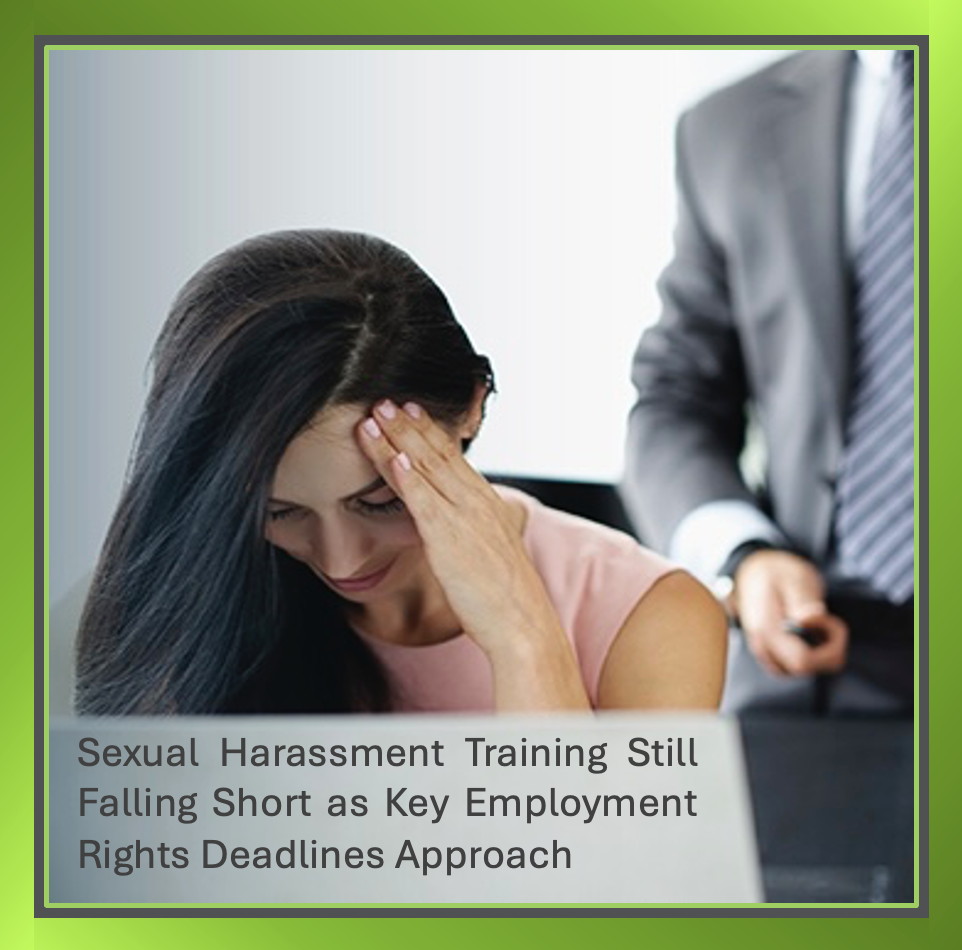
Effective sexual harassment training helps employers create safer workplaces and prepare for changing legal responsibilities.
According to a poll of 464 HR professionals carried out by compliance eLearning provider VinciWorks, 81% of HR professionals say they plan to do more to prevent sexual harassment under the Employment Rights Act. However, the same research found that only 5% rate their current training as excellent, while nearly one in eight employers admit they provide no sexual harassment training at all.
For employers, this should serve as an important wake-up call.
Why this matters now
The legal landscape is changing.
From 6 April 2026, disclosures relating to sexual harassment will be classed as protected whistleblowing under the Employment Rights Act. This means employees who report concerns about sexual harassment must not be subjected to any detriment as a result.
Further changes are expected in October, when employers will be required to take all reasonable steps rather than simply reasonable steps to prevent sexual harassment. At the same time, organisations may also face new liability for harassment carried out by third parties, such as customers, clients, and contractors.
These developments place a much greater emphasis on prevention, reporting processes, and meaningful training.
Good intentions are not enough
The VinciWorks research shows that many employers are planning improvements:
- 62% expect to do a bit more on sexual harassment prevention
- 19% expect to do a great deal more
But current training provision tells a different story.
- Only 5% described their training as excellent
- 43% said it was only “OK” and could be better
- 12% said they do not provide any sexual harassment training at all
This gap between intention and delivery presents a clear risk. Inadequate, outdated, or inconsistent training may not be enough to demonstrate compliance if an issue reaches tribunal.
Training needs to be practical, relevant and effective
Sexual harassment training should not be seen as a tick-box exercise.
To be effective, training must help employees and managers understand:
- what sexual harassment is and how it can show up in the workplace
- how to recognise inappropriate behaviour early
- what steps to take if they experience or witness it
- how managers should respond appropriately and confidently
- how reporting and whistleblowing processes work in practice
At Tick HR Solutions, we support organisations to build safer, more respectful workplaces through practical HR support and training. Through Evolve Hub, our training platform, we offer sexual harassment training designed to help employers meet their responsibilities and give teams the knowledge and confidence they need.
Whistleblowing procedures also need review
The research also highlighted concern around whistleblowing readiness.
Only 5% of respondents said they were completely confident that their whistleblowing procedures are effective. While 39% said they were confident, 25% described themselves as only slightly confident or not confident at all.
This matters because sexual harassment complaints have traditionally been dealt with through HR grievance processes, while whistleblowing has often been handled separately. As the legal position changes, employers need to ensure these processes are aligned and that employees can raise concerns safely and clearly.
If your organisation has not reviewed how these procedures work together, now is the time to do so.
What employers should be doing now
With legal expectations increasing, employers should act sooner rather than later. Key steps include:
- reviewing current sexual harassment policies
- assessing whether training is up to date and fit for purpose
- ensuring managers understand their responsibilities
- checking that whistleblowing and grievance procedures are aligned
- documenting the steps taken to prevent harassment
- considering risks posed by third parties, including clients and customers
How Tick HR Solutions can help
At Tick HR Solutions, we help businesses take a proactive approach to compliance, culture, and employee wellbeing.
Through Evolve Hub, we offer sexual harassment training that supports employers in raising awareness, reducing risk, and preparing for changing legal duties. Combined with our wider HR expertise, we can help your organisation review policies, strengthen reporting processes, and create a workplace culture where concerns are taken seriously.
Final Thoughts
The message is clear, many employers know they need to do more, but too many are still not where they need to be.
As legal duties around sexual harassment prevention and whistleblowing become more robust, organisations can no longer rely on basic, outdated, or non-existent training. Taking action now can help protect your people, reduce legal risk, and demonstrate a genuine commitment to a respectful workplace.
If you would like support with sexual harassment training, policy reviews, or preparing your organisation for upcoming changes, Tick HR Solutions and Evolve Hub are here to help.
Call our team today on 01522 448 181