Surviving the “Low-Churn Limbo”: Why SME Employers Must Shift from Hiring to Retaining in 2026
The UK job market has entered a peculiar phase that economists are calling the “low-hire, low-fire” cycle. According to the latest ONS data, vacancies have dipped to a five-year low of 707,000, and unemployment sits at 4.9%. People simply aren’t moving.
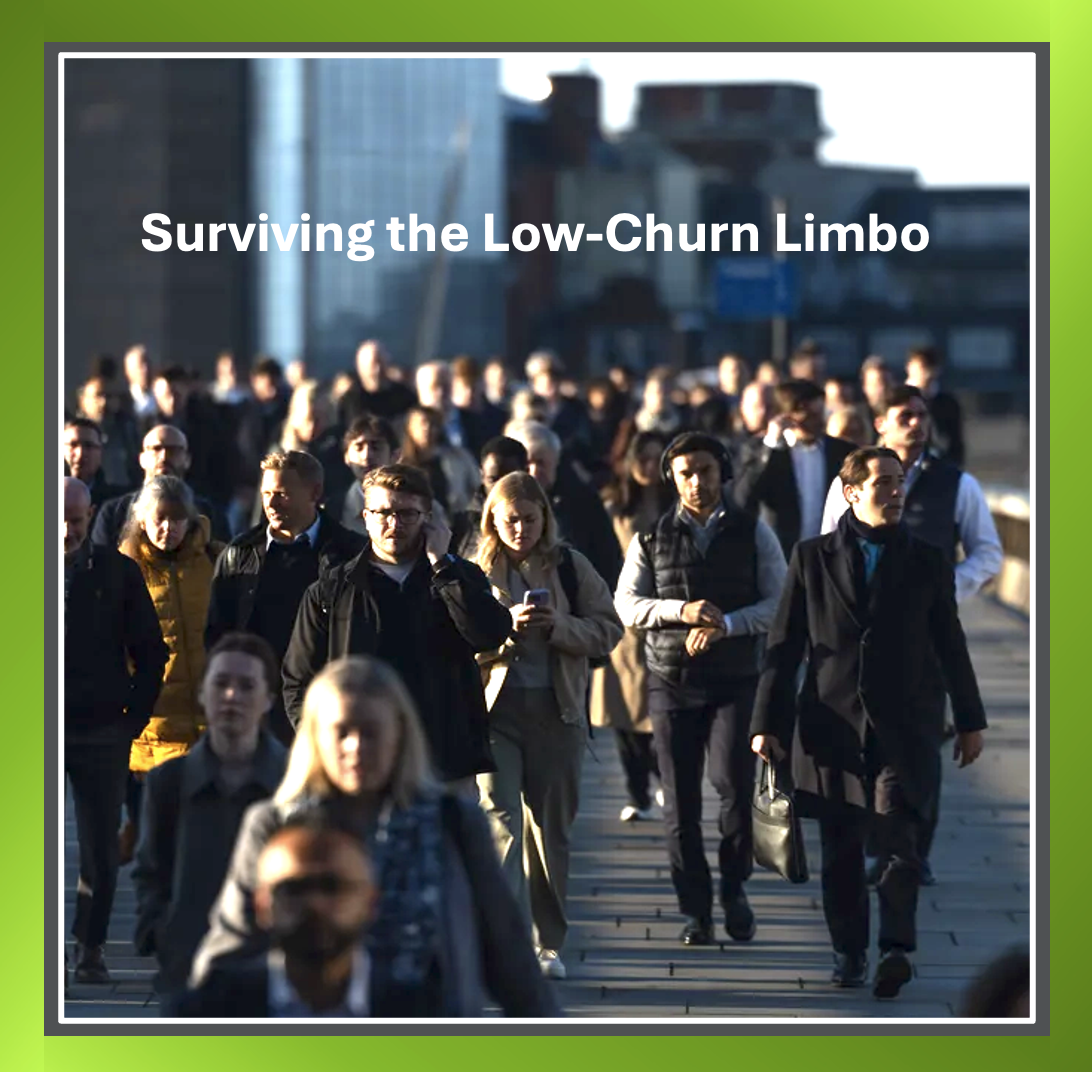
Navigating the ‘low-hire, low-fire’ cycle in UK city centres
For Small and Medium Enterprises (SMEs), this “low-churn limbo” presents a unique challenge. While high operating costs and economic uncertainty make scaling back recruitment a sensible financial move, a stagnant workforce carries its own risks: hidden burnout, quiet quitting, and skills stagnation.
When you cannot easily hire external talent to inject new energy into your business, you have to optimize the talent you already have. Here is how SME employers can navigate this low-churn environment effectively:
Combat “Quiet Quitting” with Internal Mobility
When external opportunities dry up, ambitious employees can feel trapped. If they do not see a future within your business, their productivity will drop. Take the time to map out clear internal progression paths. Can a lateral move give them a fresh challenge? Can they spearhead a new project? Moving people internally keeps motivation high without adding to your headcount costs.
Standardise Your Return-to-Work Support
Recent data shows that 27% of UK workers returning from stress-related absences receive zero structured formal support. In a small team, losing a key player to long-term sickness can cripple daily operations. Implement structured, phased-return programs. Prioritising mental health and workplace well-being isn’t just a legal consideration, it is a critical retention strategy for small businesses.
Find the Compromise on Flexible Working
The tug-of-war over remote work continues. Data reveals that 70% of employees view flexibility as their top priority, with a preference for 1–2 days in the office.
Meanwhile, nearly half of UK employers are pushing for 3 or more days on-site. As an SME, you may not be able to compete with corporate giants on salary, but you can compete on agility. Offering genuine flexibility is your biggest asset for keeping your best people happy.
Prepare for the 2026/2027 Legislative Wave
With sweeping changes coming from the Employment Rights Act including day-one sick pay and stricter workplace harassment duties in 2026, followed by the 6-month unfair dismissal right in 2027 the cost of getting employment wrong is rising. Building a supportive, legally compliant culture now will protect your business later.
The Bottom Line
In a low-churn market, your current team is your growth engine. SMEs that focus less on filling empty seats and more on engaging, supporting, and upskilling their existing staff will emerge from this economic cycle stronger, leaner, and more resilient.