What is ACAS and Why Is Its Code of Practice Important for Employers?
If you run a business or employ staff, you may have heard of ACAS, but do you know what it is and why it is so important in the workplace?
What is ACAS? A Guide to the ACAS Code of Practice for Employers
ACAS plays a vital role in helping employers and employees understand their workplace rights and responsibilities. Its guidance is designed to encourage positive working relationships, resolve workplace disputes and ensure that employment matters are handled fairly and consistently.
At Tick HR Solutions, we believe understanding ACAS and its Code of Practice is an important part of managing a successful business and creating a positive working environment.
What is ACAS?
ACAS stands for the Advisory, Conciliation and Arbitration Service.
It is an independent organisation that provides free and impartial advice to employers and employees on employment rights, workplace relationships and employment law.
ACAS helps businesses and individuals understand their responsibilities, deal with workplace issues and resolve disputes before they escalate.
It also provides guidance on good employment practices, helping employers manage their people fairly and confidently.
What is the ACAS Code of Practice?
The ACAS Codes of Practice set out recognised standards and procedures for dealing with certain employment-related situations.
They provide practical guidance on how employers and employees should approach workplace matters, helping to ensure that issues are dealt with fairly, consistently and reasonably.
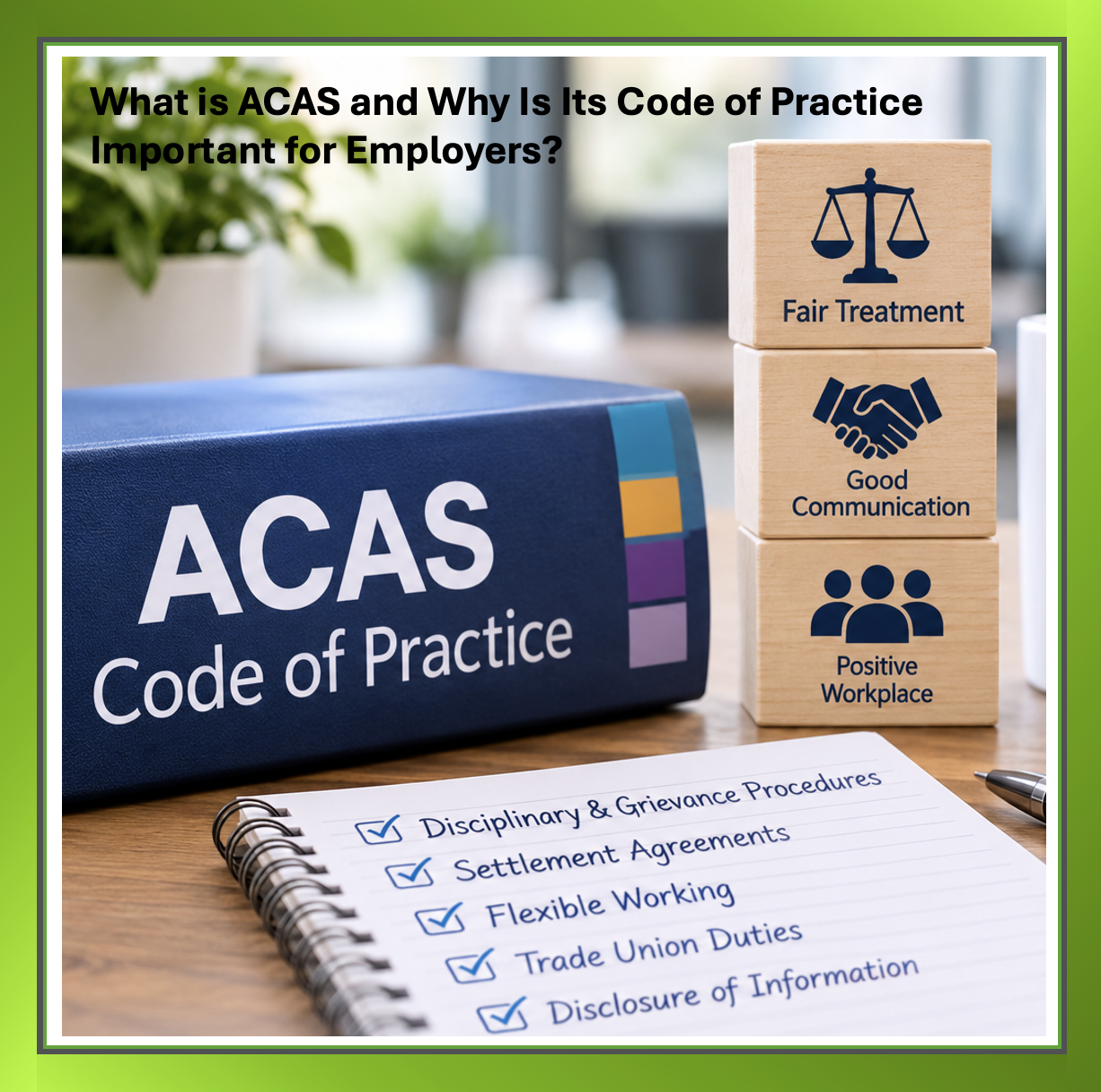
Some of the key areas covered by ACAS Codes of Practice include:
- Disciplinary and grievance procedures: Guidance on how employers should handle disciplinary issues, misconduct, poor performance and employee grievances fairly.
- Settlement agreements: Guidance on the use of settlement agreements when resolving employment disputes.
- Flexible working requests: Guidance on how employers should handle and respond to flexible working requests.
- Trade union duties and activities: Guidance on time off for employees undertaking trade union duties and activities.
- Disclosure of information to trade unions: Guidance on providing relevant information to trade unions for collective bargaining purposes.
These codes help employers understand the correct processes to follow and give employees reassurance that workplace matters should be handled fairly.
Why is the ACAS Code of Practice important for employers?
Following ACAS guidance is about more than simply ticking a box. It helps businesses create a fair, transparent and well-managed workplace.
For employers, following the relevant Codes of Practice can help to:
- Ensure employees are treated fairly and consistently.
- Reduce the risk of workplace disputes escalating.
- Provide clear procedures for managing disciplinary and grievance matters.
- Support better communication between employers and employees.
- Reduce the risk of costly and time-consuming employment tribunal claims.
- Demonstrate that the business has taken reasonable steps to follow good employment practices.
Having the right HR policies and procedures in place is an important starting point, but it is equally important to make sure they are followed correctly.
What happens if an employer doesn’t follow the ACAS Code?
Certain ACAS Codes of Practice have statutory status, meaning employment tribunals must take them into account where they are relevant to a case.
In particular, the ACAS Code of Practice on Disciplinary and Grievance Procedures is particularly important.
If an employer or employee unreasonably fails to follow the relevant provisions of this Code, an employment tribunal can increase or reduce an award by up to 25%, depending on the circumstances.
For employers, this could mean an increased financial award if a tribunal finds that they have unreasonably failed to follow the Code.
It is important to understand that not every ACAS Code has the same statutory status, and failing to follow a Code does not automatically mean an employer will lose an employment tribunal claim. However, ignoring relevant guidance can have significant consequences.
How can businesses make sure they are following ACAS guidance?
Being aware of ACAS is one thing; making sure your business follows the correct procedures is another.
Employers should regularly review their HR policies and procedures to ensure they reflect current employment legislation and good practice.
This includes having clear disciplinary and grievance procedures, understanding how to manage flexible working requests, training managers and ensuring that workplace issues are dealt with promptly and fairly.
If you are unsure whether your existing policies and procedures meet the required standards, seeking professional HR advice can help you identify any gaps and put the right processes in place.
How Tick HR Solutions Can Help
Understanding employment law and keeping up with changes can be challenging, particularly for small and growing businesses without an in-house HR team.
At Tick HR Solutions, we help businesses navigate their HR responsibilities, put effective policies and procedures in place and manage employee matters with confidence.
Whether you need support with disciplinary procedures, employee grievances, employment contracts or general HR advice, we can help ensure your business is taking the right approach.
Getting HR right from the start can save your business time, money and unnecessary stress.
If you would like support with your HR policies or want to make sure your business is following the correct ACAS guidance, get in touch with Tick HR Solutions today.
Tick HR Solutions – here to help you get HR right.