New legislation is changing employee relations (and what SMEs should do next)
The Employment Rights Act 2025 is one of the most significant updates to UK employment law in a generation. Several changes affecting day-to-day employee relations are already in force, with further developments landing over the next 12 months and into 2027.
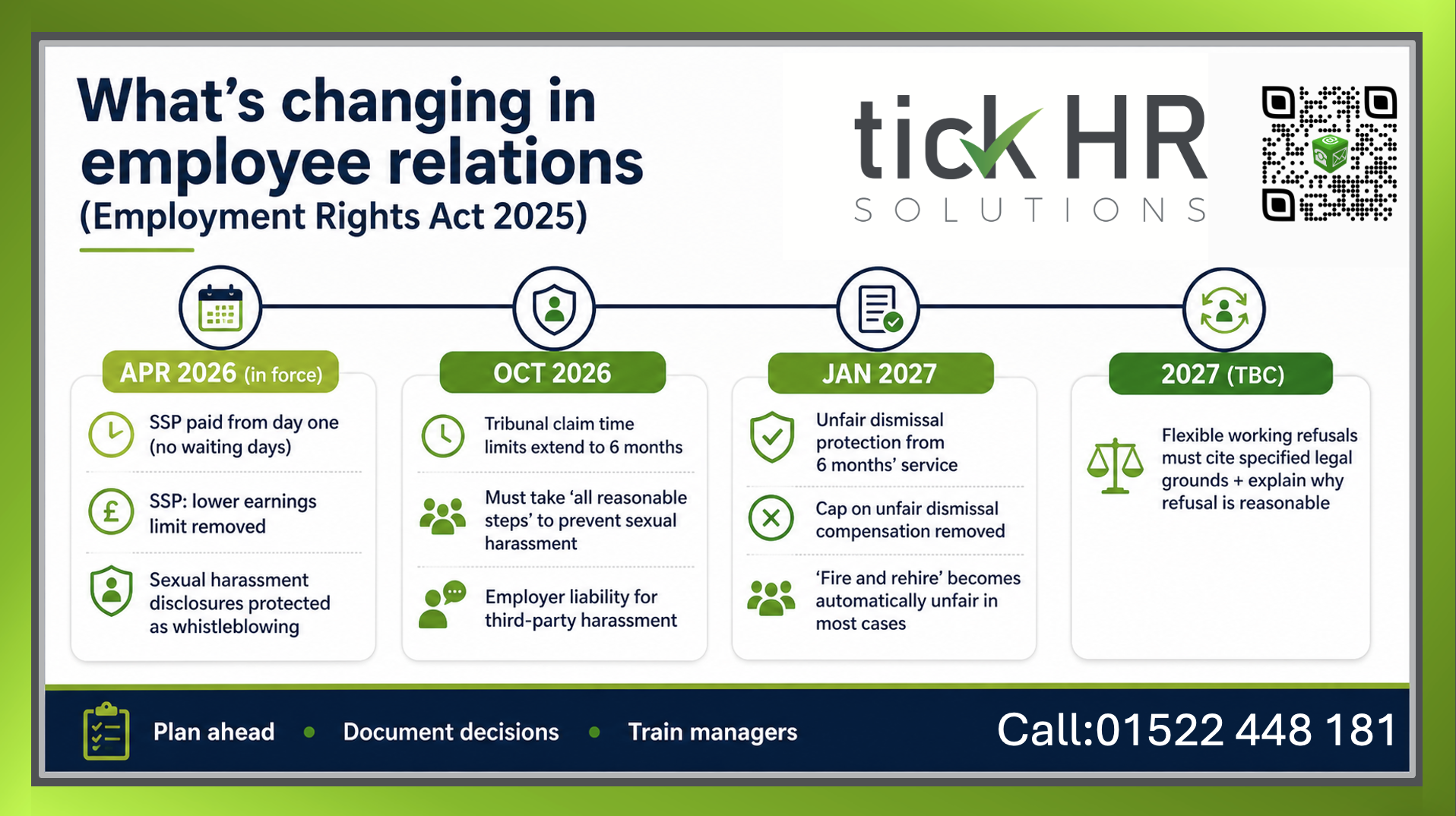
New Legislation roadmap 2026
For employers, the key shift is this: what used to be “good enough” when handled informally can now create bigger costs, risks, and management time. The organisations best placed are the ones that can show clearly and consistently that they’ve acted fairly, followed a proper process, and kept accurate records.
If you’d like practical support implementing these changes (policies, templates, manager guidance, and case handling), call Tick HR Solutions on 01522 448 181.
What’s changing
October 2026
- Tribunal claim time limits extend to 6 months for most claims.
What this means: Employees have longer to bring a claim, so your records need to be stronger and kept for longer (notes, emails, meeting outcomes, decision logs). - Employers must take “all reasonable steps” to prevent sexual harassment.
What this means: Expect a higher bar than a one-off training session. You’ll need to show a genuine, ongoing prevention effort. - Employer liability for third-party harassment (clients, customers, contractors).
What this means: Complaints involving people outside your organisation now need the same structured responses as internal complaints.
January 2027
- Unfair dismissal protection applies from 6 months’ service (not 2 years).
What this means: Many more employees are covered much earlier so probation management and documentation become even more important. - The cap on unfair dismissal compensation is removed.
What this means: The financial risk of getting a dismissal wrong could increase making fair process and paperwork essential. - “Fire and rehire” becomes automatically unfair in most cases.
What this means: Restructuring on worse terms carries much higher legal risk plan carefully, consult properly, and explore alternatives.
2027 (date to be confirmed)
- Flexible working refusals must cite specified legal grounds and explain why refusal is reasonable.
What this means: Each flexible working decision will need a documented, defensible rationale not an informal “we can’t do that here”.
If you’d like help getting your policies and processes ready ahead of these dates, call Tick HR Solutions on 01522 448 181.
What this means for SMEs: “informal HR” won’t cut it
Taken together, these changes raise the standard of what employers need to evidence. A process that relies on “we usually do it this way” (or one person remembering deadlines) becomes much harder to defend especially with longer claim time limits and broader unfair dismissal protection.
Practical next steps you can take now
- Review your approach to performance, conduct, probation and dismissals (and make sure decisions are well-documented)
- Refresh your harassment prevention measures and reporting routes (including third-party scenarios)
- Put a simple case tracking process in place so nothing relies on memory (dates, meetings, actions, outcomes)
- Ensure managers know how to respond consistently and professionally—especially when issues are sensitive
If you want help making these changes practical (without drowning in admin), call Tick HR Solutions on 01522 448 181.
Note: This is general information, not legal advice